Short answer: many mortgage lenders turn down homes with spray foam insulation because the foam covers the roof timbers, so a surveyor cannot check them for damp or rot. If you are selling or remortgaging, you can either have the foam inspected by a qualified spray foam surveyor and hope the lender accepts the report, or have it removed so the roof can be surveyed like any other. Removal is the most certain fix.
Spray foam was sold to many homeowners as a quick way to cut heating bills, sometimes through high-pressure doorstep selling. Years later, many owners only find out it is a problem when they come to sell or remortgage: the surveyor spots foam in the loft, the lender declines, and the sale stalls. This guide explains why lenders are wary, how to tell what you have, and your options if you are selling, buying or remortgaging a home in Dorset or Hampshire.
Why do mortgage lenders refuse spray foam insulation?
Lenders lend against the value of the house, and the roof is a big part of that value. Their valuers and surveyors need to see the roof structure to judge its condition. Spray foam gets in the way of that in four ways:
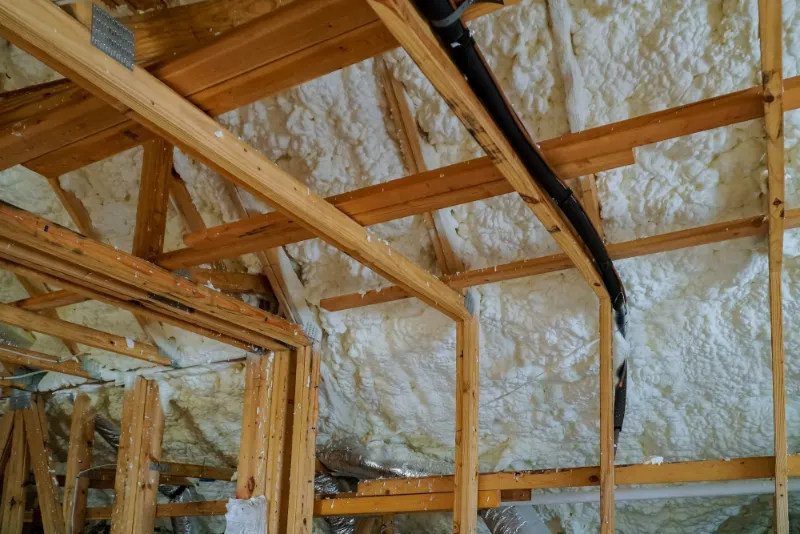
It hides the roof timbers. Foam sprayed between and over the rafters stops a surveyor checking them for damp, rot or woodworm. The RICS consumer guide to spray foam insulation warns that it can restrict the view from inside the roof space, which makes roof problems hard to spot.
It can trap moisture. Most older roofs are cold roofs, built with a ventilated loft so damp air can escape. Spray foam turns them into warm roofs. If that change is not designed properly, condensation can collect against the timbers and slowly rot them.
It can hide a roof that is already failing. Closed-cell foam has sometimes been sprayed onto the underside of tiles or slates to hold slipping ones in place. That hides the problem instead of fixing it.
It is hard to reverse. Once the foam is on, taking it off is skilled work, so the cost of putting things right falls on whoever owns the house next.
The problem is not rare. In a May 2025 survey by the Property Care Association (PCA), surveyors on its spray foam register reported at least one defect caused by the foam in 35% of the more than 500 homes they had inspected, and recommended major work, such as new insulation or a new roof, in 27%.
Lender policies differ. Some refuse any home with spray foam, others decide case by case using the valuer's report and the paperwork, and policies change. Ask your lender or mortgage broker for their current position before you commit to anything.
Open-cell or closed-cell: which spray foam do you have?
There are two main types of spray foam, and they behave differently in a loft.
Open-cell foam | Closed-cell foam | |
|---|---|---|
Feel | Soft and spongy | Hard and rigid |
Moisture | Lets some water vapour through | Blocks water vapour |
Where you find it | Sprayed between the rafters | Often sprayed onto the underside of tiles, slates or felt |
Removal | Quicker to cut away | Bonds firmly, so removal takes longer |
Either type can cause a mortgage problem. What matters to a lender is whether the roof can be inspected, whether the foam was installed properly, and whether there is paperwork to prove it.
How to check your loft for spray foam
Look at the underside of the roof. Spray foam is usually cream, white or yellow, with a lumpy surface, and covers the roof slope between (and often over) the rafters. Rolls of insulation laid across the loft floor are not spray foam.
Check whether you can see the timbers. If the rafters are buried in foam, a surveyor cannot inspect them either.
Look for warning signs: damp or dark patches on the foam or timbers, a musty smell, foam pulling away from the rafters, or water marks on the ceilings below.
Find the paperwork: who installed the foam and when, the product used, any certificates (such as from the British Board of Agrément) and any guarantee. A lender or surveyor will ask for it.
Do not cut into the foam yourself. Take photos instead. They help a surveyor or roofer give you useful advice before a visit.
Selling, buying or remortgaging with spray foam: your options
Option | What it involves | Best when |
|---|---|---|
Keep the foam and get an inspection report | A surveyor trained in the PCA's Sprayed Foam Insulation Inspection Protocol checks the roof and foam without cutting into it, and writes a report for lenders. | The foam is recent, was fitted by a reputable firm, comes with full paperwork and shows no sign of damp. |
Have the foam removed | The foam is cut away and the loft is cleaned, so the timbers can be inspected like any other roof. | A lender has already refused, there is no paperwork, or an inspection report has found defects. |
Find a lender who will consider it | A mortgage broker looks for lenders who assess spray foam homes case by case. | You are buying, the seller will not remove the foam, and it appears to be in good condition. |
Before you pay for an inspection report, ask your lender which surveyors it accepts, as some lenders keep their own approved lists. If you are buying, ask whether the price reflects the cost of removal, and get a written quote before you exchange.
Beware of scams. The PCA has warned about cold callers posing as its surveyors. It says there is no national database of homes with spray foam, and you can check that a firm or surveyor is genuine using the PCA's spray foam advice for homeowners.
What does spray foam removal involve?
Removing the foam makes the roof inspectable again, so a surveyor can check the timbers and the lender can value the home as normal. This is how Roofing & Insulation Services does it:
Free assessment and written quote. We look at the loft, the type and depth of the foam and the condition of the roof, then give you a written quote.
Safe removal and disposal. Our team, in protective clothing, cuts and scrapes the foam away from the rafters and the underside of the roof with specialist tools, then takes it away for disposal.
Cleaning and preparation. Every trace of residue is cleared and the loft is cleaned, so it is ready for a surveyor and for new insulation.
Final inspection. We check the rafters and the underside of the roof to make sure the foam has been completely removed.
Most jobs take from a few hours to a couple of days, depending on the size of the loft and how thick the foam is. Because we are roofers as well, if the timbers or the roof covering need attention once the foam is off, we tell you straight away and quote for the repair, so you do not need a second firm.
How much does spray foam removal cost?
The cost depends on the size of the loft, the type of foam (closed-cell takes longer to remove), how thick it is and how easy the loft is to get into. Every quote from Roofing & Insulation Services is free, with no obligation: we visit, look at the foam and give you a written, itemised quote. If you are selling, get a quote early, as buyers and their lenders often want to see one.
Frequently asked questions
Can I sell a house with spray foam insulation?
Yes, but it can make the sale harder. Some buyers' lenders refuse outright, and others ask for an inspection report or proof that the foam has been removed. Dealing with it before you put the house on the market, with either a report or removal, stops the sale stalling later.
Will removing spray foam make my house colder?
Not once the loft is re-insulated. With the foam gone, the loft is ready for new insulation laid across the loft floor, which keeps the roof space ventilated the way it was designed to be.
Can spray foam be used in a listed building?
Only with listed building consent, and the RICS spray foam guide says consent is unlikely to be granted. If your home is listed or protected, check with your local council before any insulation work.
Is there a government register of homes with spray foam?
No. The Property Care Association says there is no national database of homes with spray foam. If someone calls claiming your home is on one and offering a survey, treat it as a likely scam.
How long does spray foam removal take?
Usually from a few hours to a couple of days, depending on the size of the loft and the thickness of the foam. We give you an estimated timeline with your quote.
Will removing spray foam damage my roof?
Done carefully, removing the foam should not harm the timbers. If the foam was sprayed straight onto old felt or the underside of the tiles, some of the roof covering may need repairing once the foam is off. The assessment shows this, so you know before any work starts.
Book a spray foam survey in Dorset or Hampshire
Roofing & Insulation Services Ltd is a roofing, insulation and damp company based in Poole, Dorset. We remove spray foam from homes across Dorset and Hampshire, including Poole, Bournemouth, Southampton and Portsmouth, and leave a clean loft that is ready for a surveyor. Every quote is free with no obligation. We are open Monday to Saturday, 8am to 6pm.
Call 0330 133 1753 or request a free quote online. You can also read more about our spray foam removal service.